
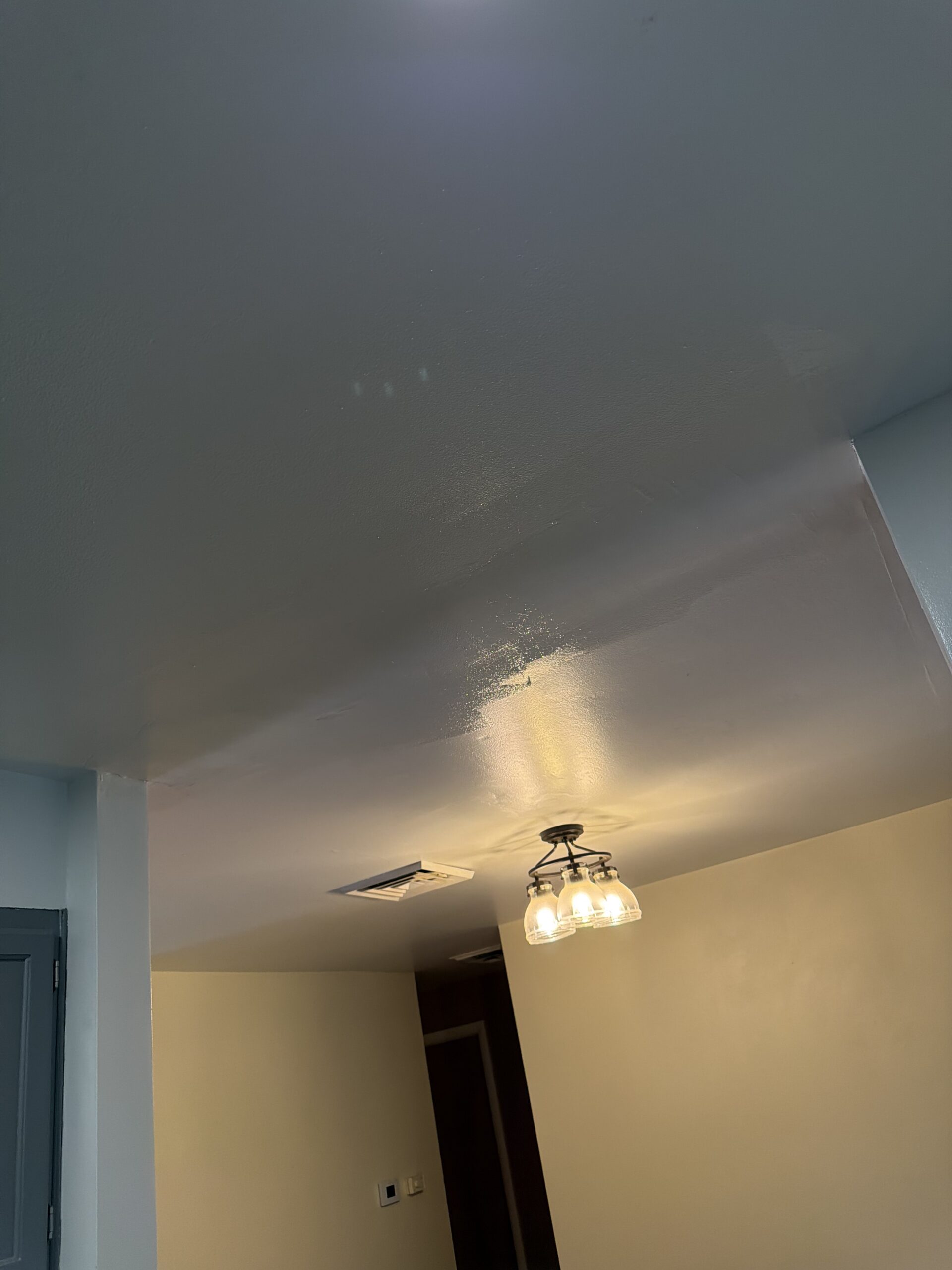
Patch Pros texture guide
Identify the Texture on Your Walls and Ceilings
Types of drywall texture found in Denver homes include orange peel, knockdown, splatter, stomp, skip trowel, popcorn, and smooth finishes. They can look similar at first glance—but the application method and repair approach are different. This homeowner guide explains what you are seeing, how each finish is made, and what matters when matching a damaged area.
Drywall texture comparison at a glance
| Texture | Typical appearance | Common application | Matching difficulty |
|---|---|---|---|
| Orange peel | Rounded bumps and dimples | Hopper or spray equipment | Medium–hard |
| Knockdown | Broader, flattened irregular patches | Spray, set time, then knockdown knife | Hard |
| Splatter | Raised spray droplets left unflattened | Hopper or spray equipment | Medium–hard |
| Stomp / brush | Repeating brush impressions and ridges | Texture brush pressed into wet compound | Hard |
| Skip trowel | Hand-shaped sweeps, ridges, and open areas | Trowel or finishing knife | Hard |
| Popcorn | Raised ceiling texture with visible aggregate | Specialty acoustic texture spray | Hard |
| Smooth | No intentional texture pattern | Multiple finish coats, sanding, sometimes skim coating | Very hard |
Orange peel texture
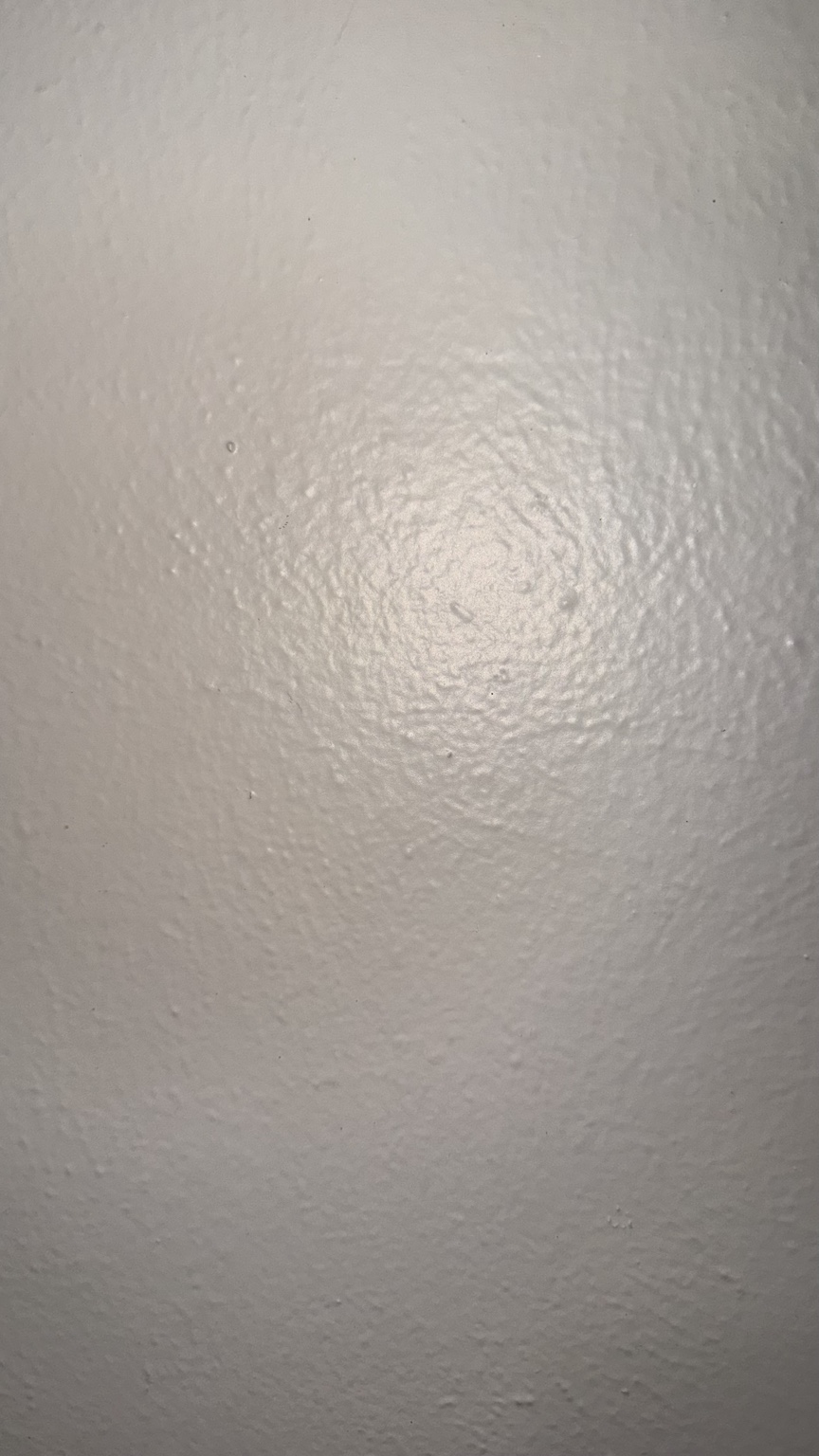
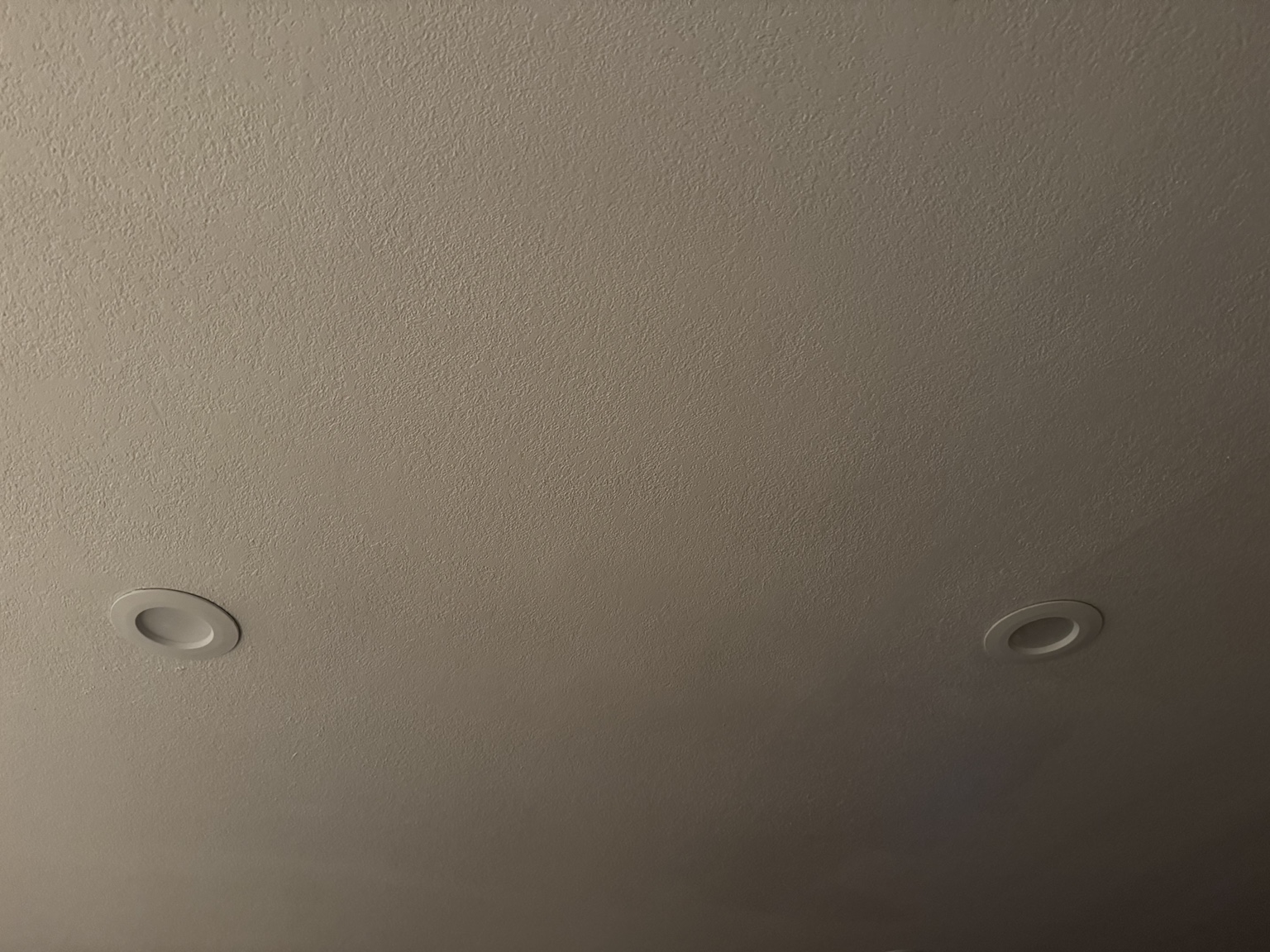
Orange peel has small rounded bumps and dimples resembling the skin of an orange. It creates a pebbled surface without the broad flattened areas found in knockdown. Light, medium, and heavy orange peel describe a range—not exact specifications—so two walls called “medium orange peel” can still look different beside one another.
What matters during a repair
The new finish needs to match the surrounding droplet size, coverage, and height. Repeated paint coats can soften an older pattern, so reproducing the original texture alone may not reproduce its present appearance.
Knockdown texture
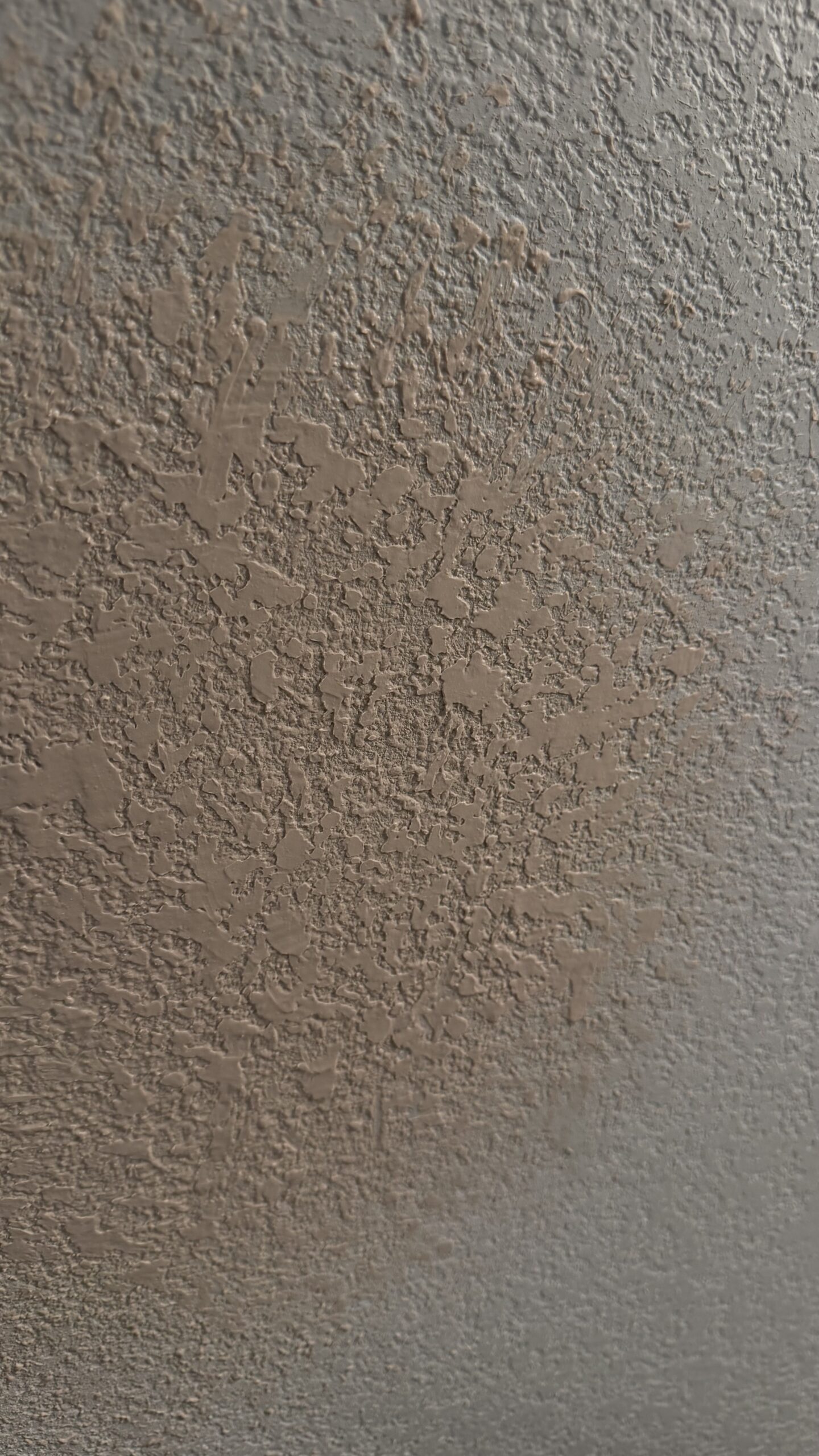
Knockdown has irregular flattened patches separated by lower areas. A sprayed pattern is allowed to firm before a knife lightly flattens its high points. Flattening too early can smear the material; waiting too long can leave hard edges.
Light, heavy, and mixed knockdown
Light knockdown leaves smaller or more widely spaced flattened areas. Heavy knockdown produces larger patches or greater coverage. Some ceilings combine brush impressions with knocked-down high points, so the existing pattern needs to be assessed rather than assumed.
Orange peel versus knockdown: orange peel stays rounded and pebbled. Knockdown has flattened tops and broader, irregular shapes.
Splatter or spatter texture
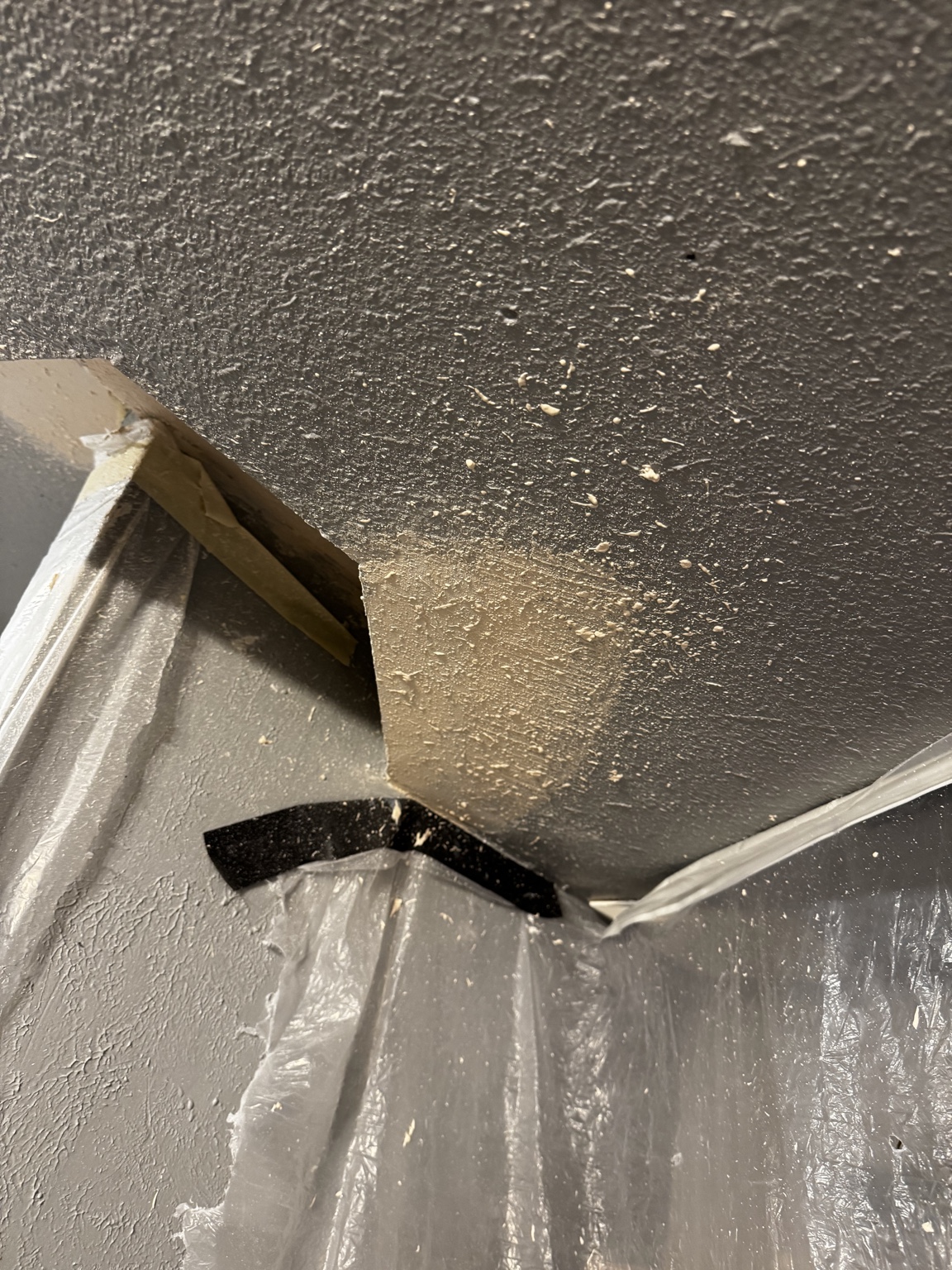
Splatter is made by spraying droplets onto the surface and leaving them raised instead of flattening them into knockdown. Fine splatter can overlap with what some contractors call orange peel; coarse splatter has larger individual droplets and more visible spacing.
“Splatter” and “spatter” are used interchangeably. “Splatter knockdown” usually means the sprayed droplets are flattened afterward. For a repair, the actual surface is more important than the label.
Stomp texture and brush patterns
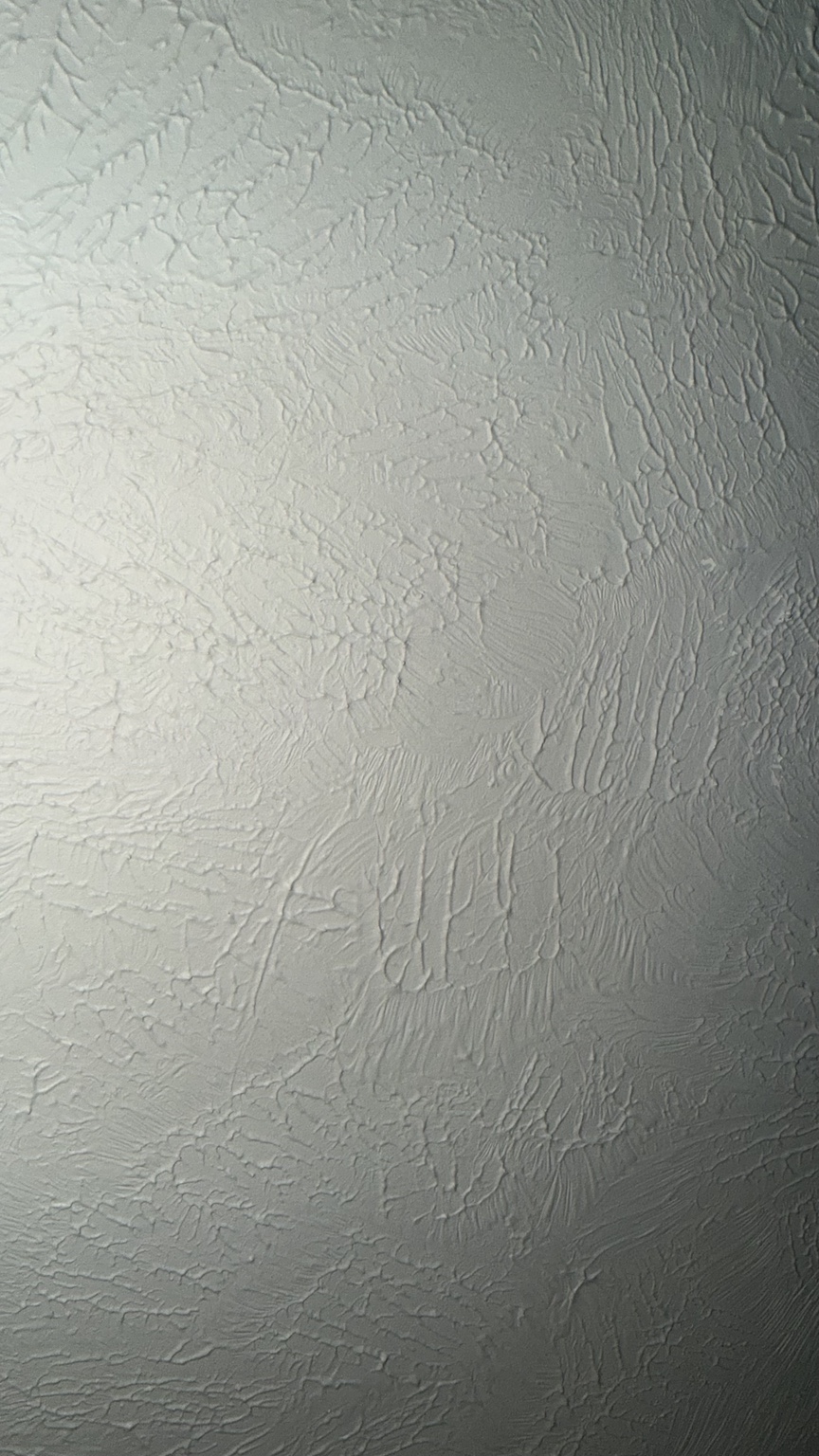
Stomp texture is created by pressing a texture brush into wet compound and pulling it away. Brush shape, material thickness, pressure, rotation, and overlap determine the pattern.
Common brush-pattern names
Slap brush often overlaps impressions for an irregular pattern. Crow’s foot leaves branching marks from a single or double brush. Rosebud creates rounded, flower-like impressions. Stomp knockdown starts as a brush pattern and then has the raised points lightly flattened.
A generic brush may not reproduce the original ceiling. Matching a small patch can require testing more than one brush or technique.
Have a damaged textured wall or ceiling?
Send one close-up photo showing the pattern, one wider photo, and one photo of the complete damaged area. Include your city and approximate dimensions.
Skip trowel texture
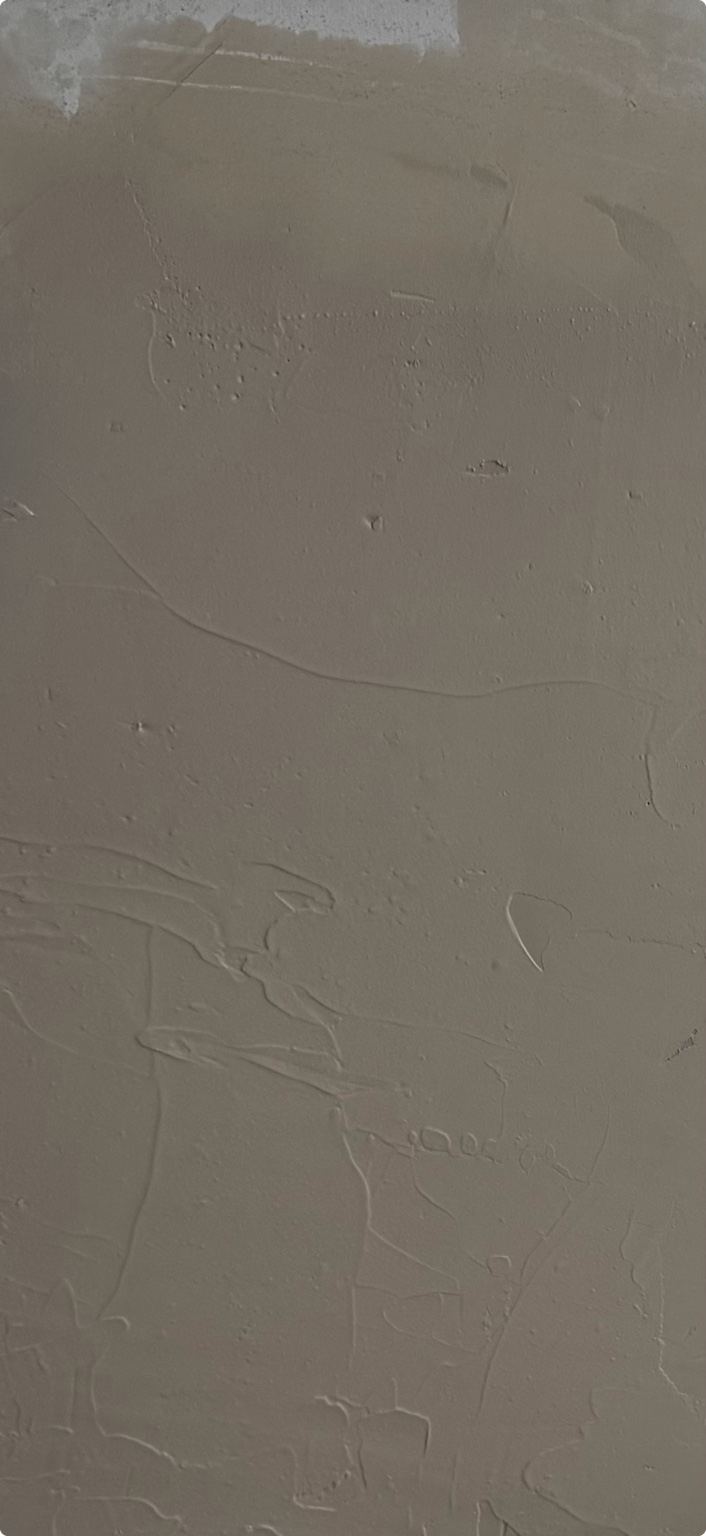
Skip trowel is a hand-applied finish made by moving a trowel across compound so it leaves irregular sweeps, shallow ridges, and areas with less coverage. Material, trowel angle, blade pressure, and hand movement shape the result.
Skip trowel versus knockdown
Both can have flattened irregular areas, but skip trowel is shaped by hand. Sprayed knockdown starts with droplets that are flattened later. Because skip trowel reflects the original finisher’s hand movements, a test area helps establish the right coverage and direction before completing the repair.
Popcorn ceiling texture and repairs
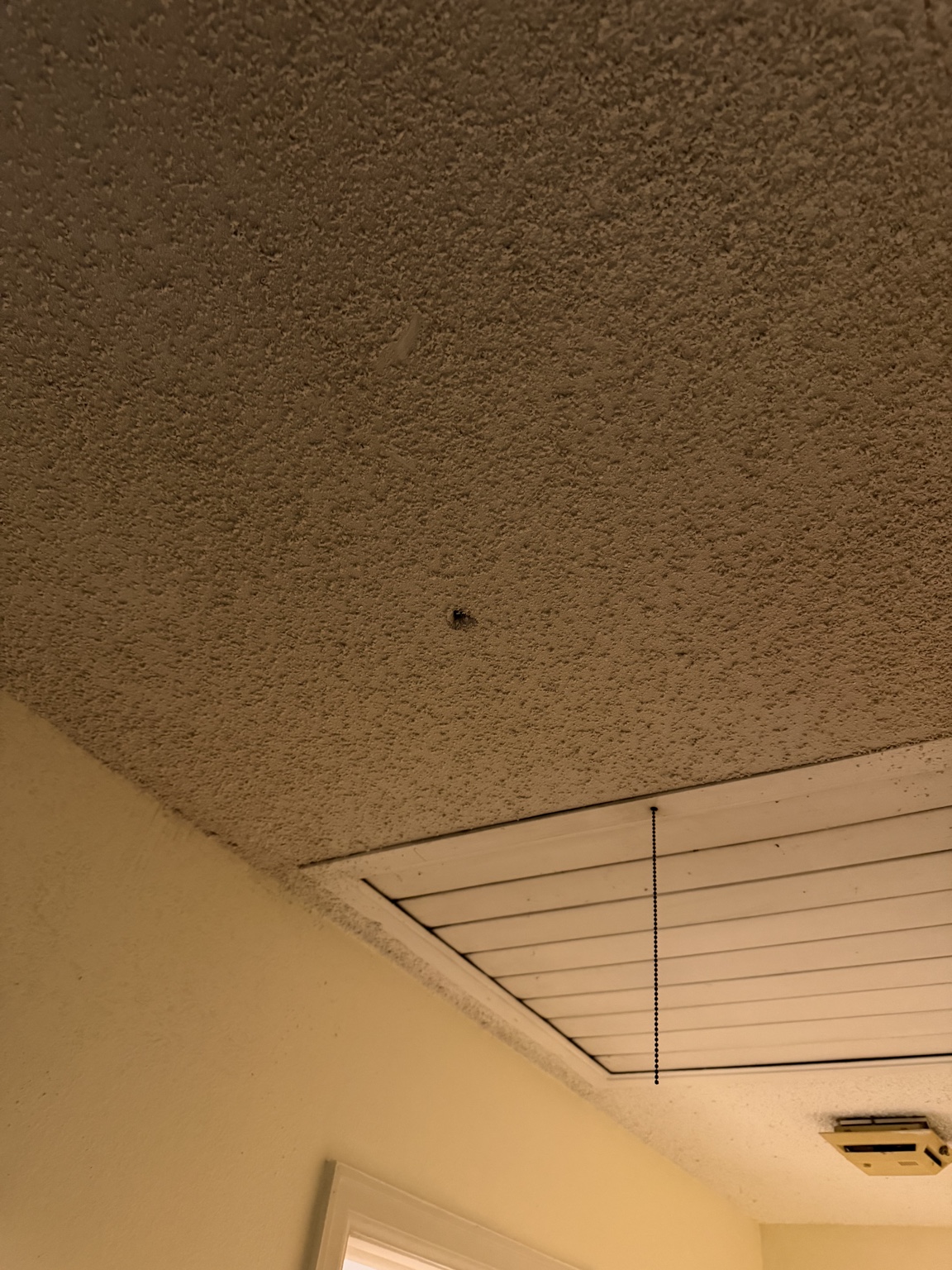
Popcorn has a raised, bumpy appearance with visible aggregate. It is also called cottage-cheese or acoustic ceiling texture. Fine, medium, and coarse versions differ in aggregate size and overall density.
Repairing popcorn or changing the finish
A localized popcorn ceiling repair may be appropriate when the surrounding ceiling is sound and the owner wants to keep the existing look. Removing popcorn does not automatically leave a paint-ready ceiling; joints, fasteners, cracks, old patches, and uneven areas may need additional finishing.
Older material must be assessed before disturbance
Some older ceiling textures and related materials may contain asbestos. Appearance cannot determine whether asbestos is present. Suspect material should be assessed and, when appropriate, sampled by a properly qualified professional before work that would disturb it.
Smooth wall and ceiling finishes
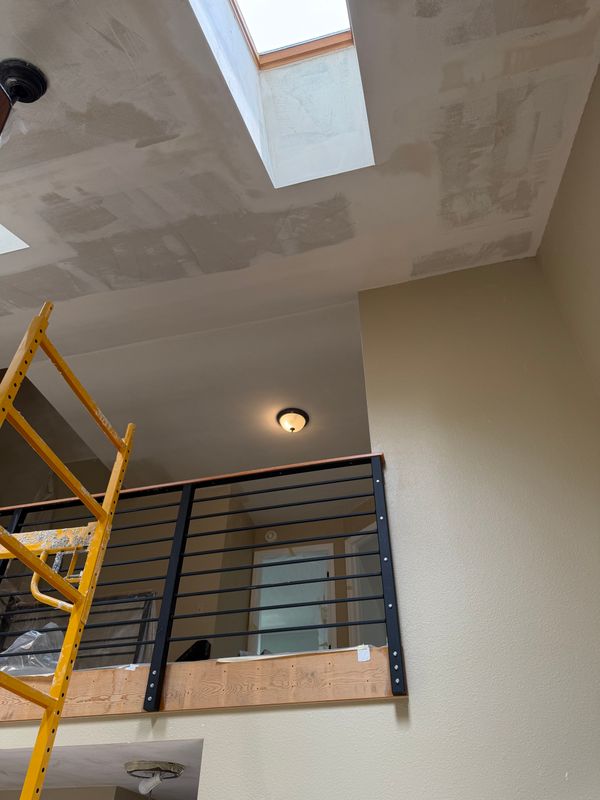
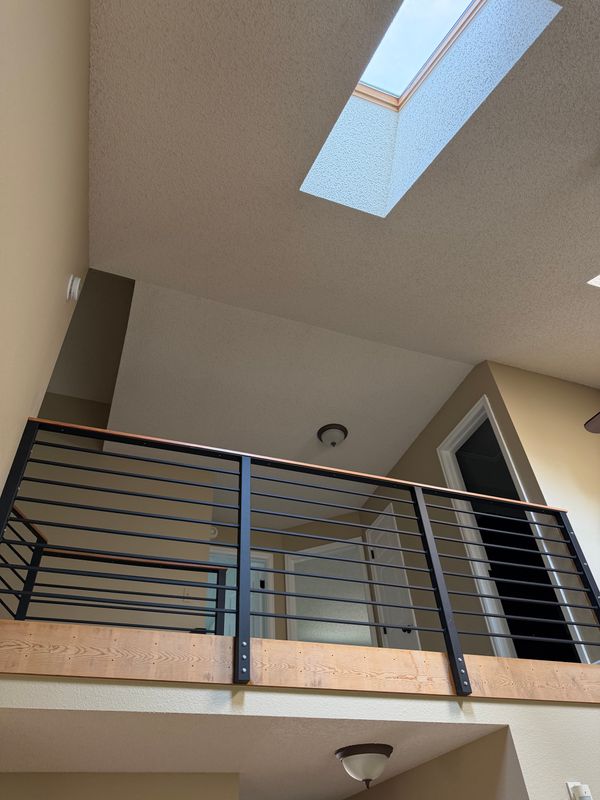
A smooth finish has no deliberately added texture pattern. It creates a clean appearance, but every ridge, transition, paint difference, and surface defect becomes more visible—especially under light traveling across the wall or ceiling.
Level 4 and Level 5 are finish levels
These terms describe drywall finishing—not texture patterns. Level 4 includes finished joints, corners, and fasteners. Level 5 adds a skim coat or appropriate surfacing material over the entire prepared surface to help create greater uniformity under demanding lighting.
Skim coating can be part of changing an existing textured surface to smooth, but loose drywall, moving cracks, damaged material, and poorly bonded texture must be addressed first.
How to identify your existing texture
Usually orange peel.
Usually knockdown.
Usually splatter.
Stomp, crow’s foot, or rosebud.
Skip trowel.
Popcorn.
Smooth finish.
Send close-up and wider photos for review.
Layers of paint, previous repairs, and mixed application methods can make identification less straightforward. A test sample is often the best way to compare the proposed repair with an undamaged area.
Real texture-matching repair examples
These Patch Pros projects show why the surface repair and texture blend must be planned together.
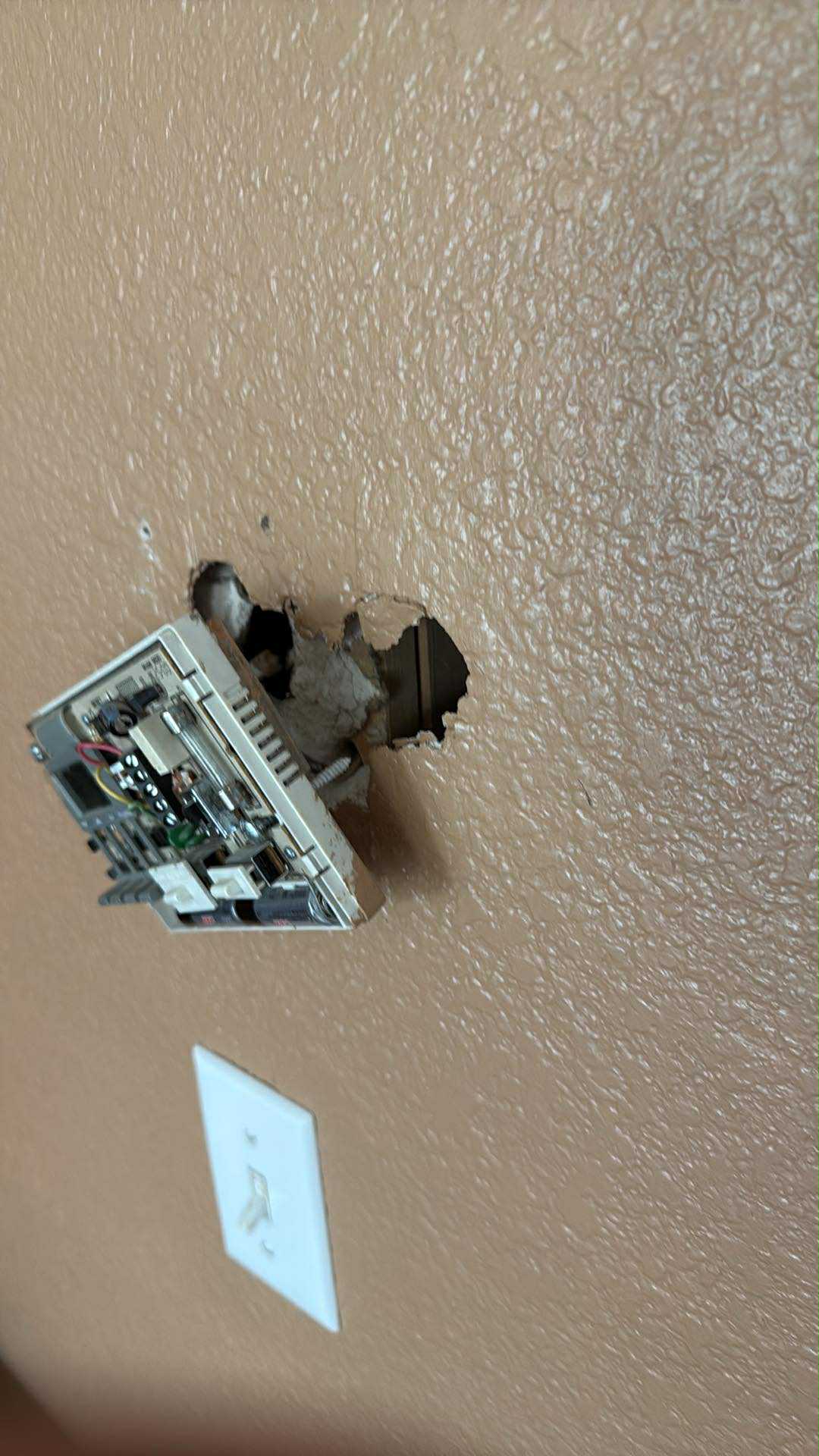
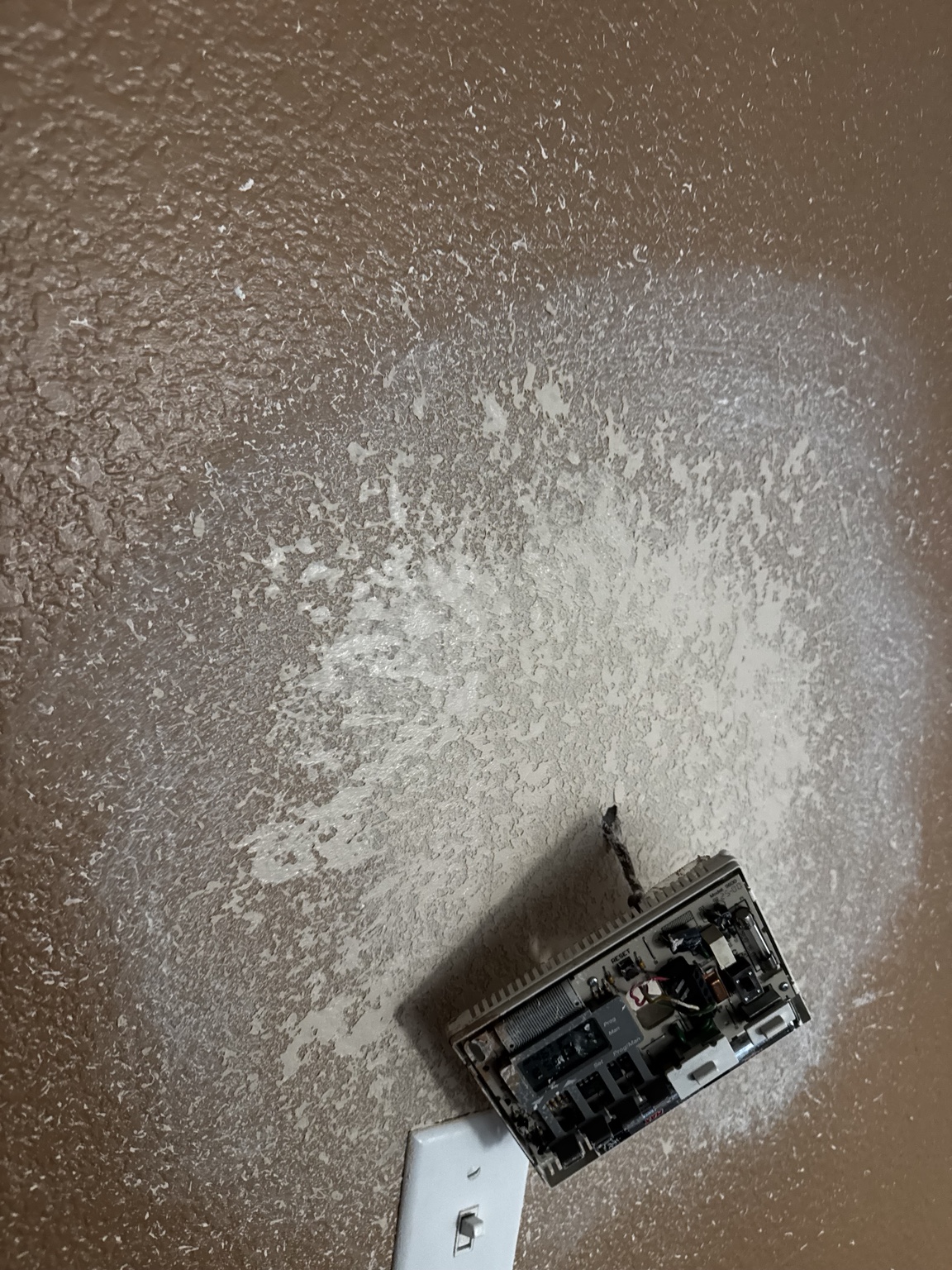
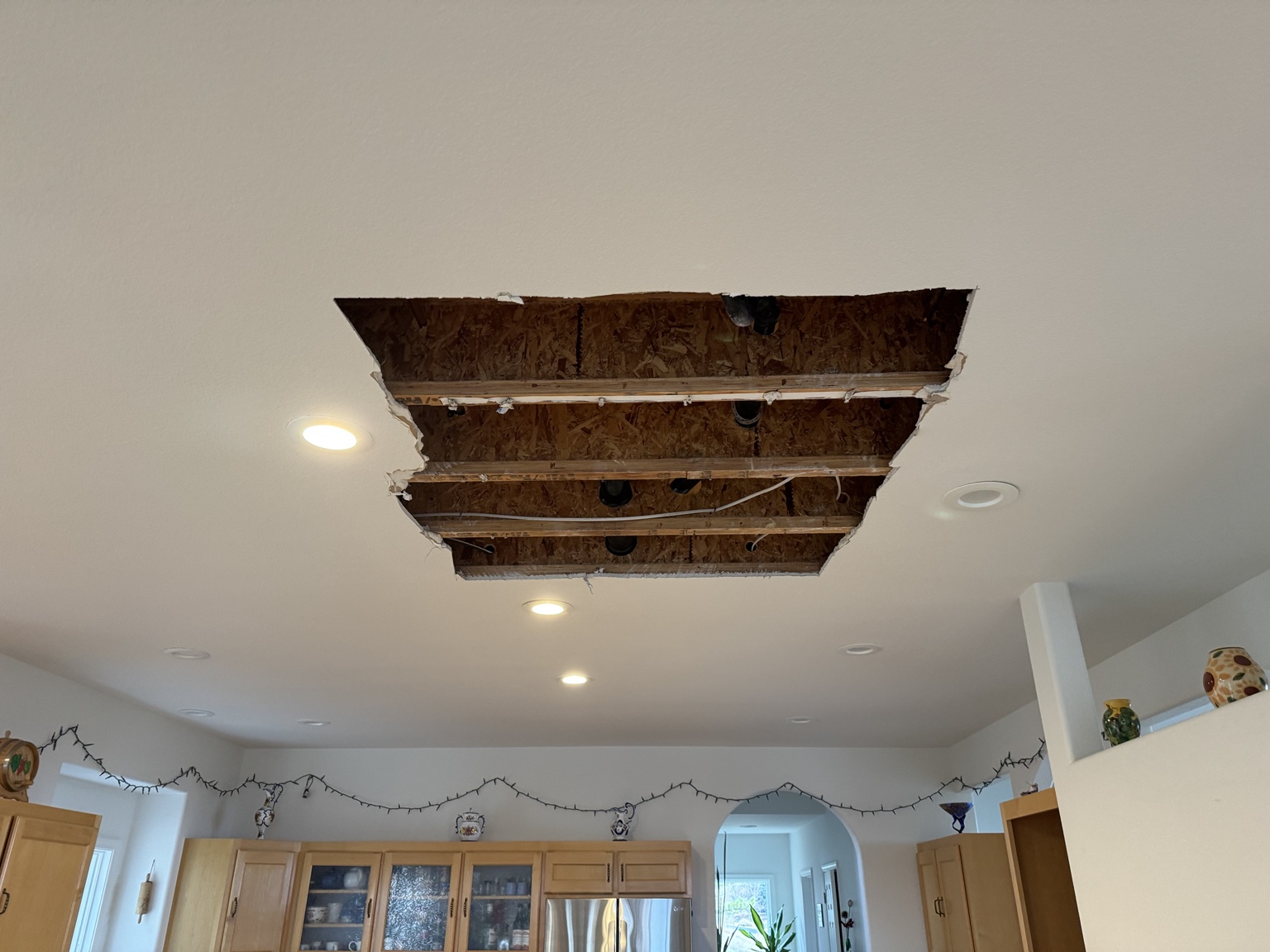
Drywall texture questions
Can I use knockdown to patch an orange peel wall?
No. Knockdown creates a different pattern. A localized repair generally needs to reproduce the surrounding orange peel unless you plan to change the finish over a larger area.
Are stomp and popcorn the same texture?
No. Stomp is created with brush impressions in wet compound. Popcorn gets its raised appearance from aggregate in the ceiling texture.
Can textured walls be made smooth?
Often, yes. The work may include reducing high spots, addressing loose material, repairing defects, and skim coating. Suspect older materials should be evaluated before they are disturbed.
Will matching the texture also make the paint match?
Not necessarily. Paint color, sheen, age, previous coats, and room lighting can reveal a touch-up even when the texture blend is close. Repainting a full wall or ceiling may create a more consistent final appearance.
Which texture should I choose?
For a localized repair, matching the surrounding finish is normally the starting point. For a remodel, compare approved samples in the actual room and consider lighting, appearance, cleaning, and future repair needs.
Texture matching across the Denver area
Patch Pros provides wall and ceiling texture matching throughout Denver and nearby communities. Explore local drywall-repair information for Centennial, Highlands Ranch, Parker, Arvada, Littleton, Denver, Wheat Ridge, or view the complete service-area map.
Need help matching your wall or ceiling?
Call or text photos to 720-980-8998. Include your city, approximate repair size, one close-up of the texture, and one wider view of the room.
Technical references: USG wall and ceiling spray textures, USG drywall finishing guidance, and EPA guidance on suspect asbestos-containing materials.