
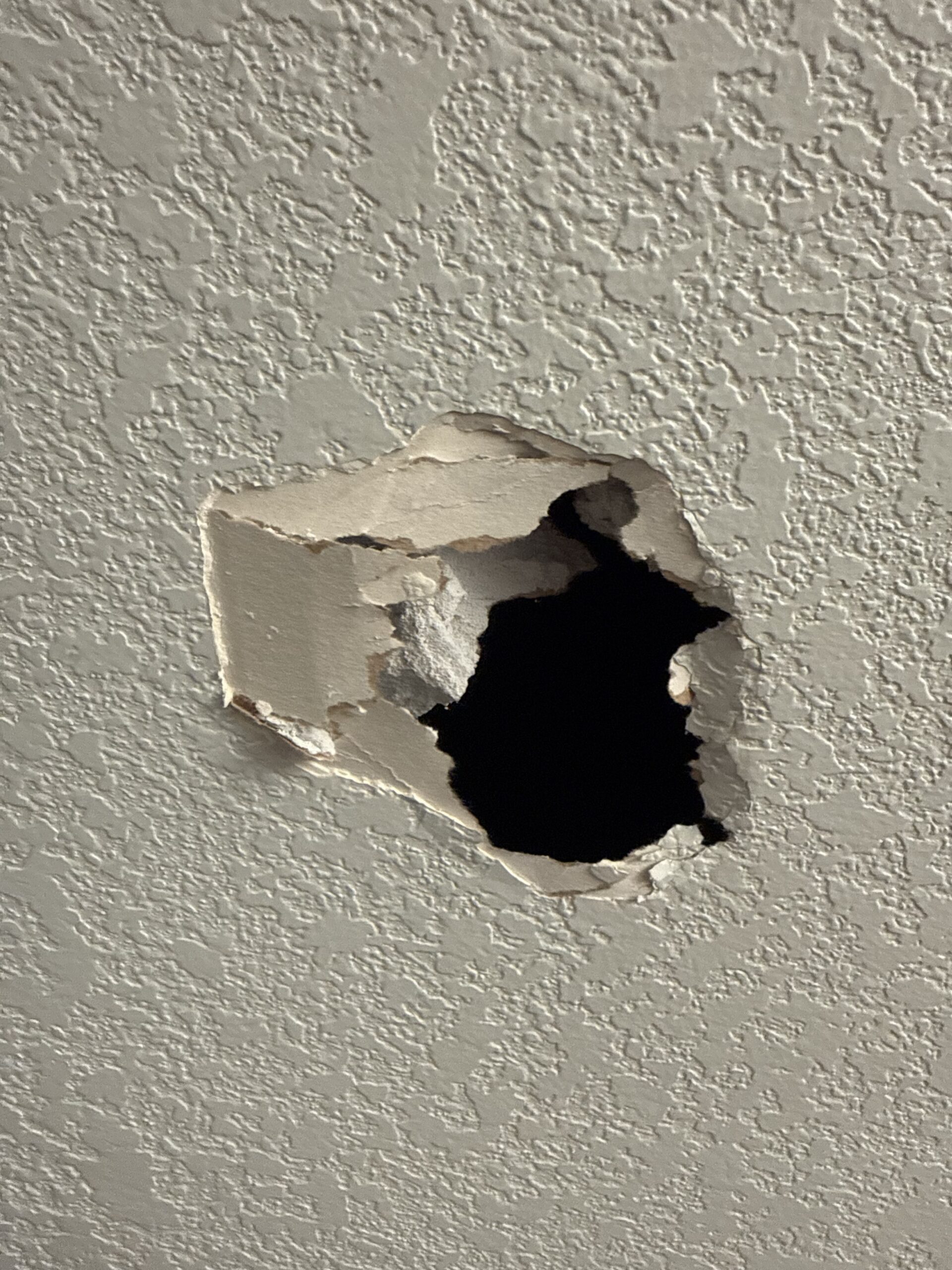
A small wall ding and an open ceiling beneath a bathroom are both drywall problems, but they are not the same project. One may be a reasonable weekend touch-up. The other can involve access, moisture, support, finishing, and work that belongs to another trade before the patch begins.
For a Denver homeowner, the decision should come from the condition, location, and finish expectations rather than the hole’s size alone. Use the checklist below to decide whether the job fits your tools and experience or whether a professional estimate is the better next step.
A DIY repair may fit a simple cosmetic problem
A few shallow nail holes or a minor dent in a sound, dry interior wall can be a manageable project for someone comfortable following the repair product’s instructions. The surface should be accessible, the surrounding material stable, and the finish expectations realistic.
Start by asking why the damage occurred. An isolated furniture bump is different from a crack that reopens or a stain that keeps growing. If you cannot explain the damage, do not assume a tub of patching compound answers the important question.
Also consider the room. A utility-area touch-up may be less demanding than a smooth wall beside a large window, where side lighting reveals every edge.
Call a professional when the scope is more complicated
Openings need support or further investigation
A hole left by plumbing or electrical work may need a supported patch, reinforced joints, and careful blending. Confirm that the trade contractor has finished and that no inspection or future access is needed before the opening is closed. Read our guide to drywall repair after plumbing or electrical work for questions to ask.
Ceiling work creates access challenges
Working overhead, near fixtures, or above a stairwell adds difficulty that does not show in a close-up photograph. Avoid working beneath sagging or wet material. For openings, failed seams, or damaged sections overhead, discuss the setup through our ceiling repair service.
Damage keeps returning
Recurring cracks, loose tape, or several failed patches need a closer look at the surface and the likely cause. More filler may not solve the underlying problem. Mention previous repairs and provide photos showing how the area changed over time.
Pause before disturbing unknown older materials
The age and condition of the surface affect the decision. The EPA’s guidance for DIY renovations explains that disturbing lead-based paint in older homes can create hazardous dust. Check the home’s age and the materials before sanding or scraping; obtain appropriate testing and qualified help when needed.
Similarly, you cannot identify asbestos-containing material by appearance alone. Before disturbing suspect ceiling or wall materials, follow the EPA’s advice on professional sampling. A general drywall estimate does not establish that unknown coatings are safe to disturb.
These are reasons to pause and assess the scope, not reasons to cover the problem with another layer of compound.
Compare the whole DIY cost
Add tools, protection, and finishing materials
The patching product is only one part of the project. Depending on the repair, you may need suitable knives, reinforcement, sanding supplies, floor protection, primer, texture materials, and paint. Compare the total with what you already own and can use correctly.
Include your time and repeat visits
Setup, drying, sanding, cleanup, and painting can spread a small repair across several sessions. Account for moving furniture and keeping the space available between stages. Setting compound faster does not mean every repair is immediately ready for paint.
Consider the cost of correcting the finish
A raised patch or overly heavy texture may need a larger repair later. If the result matters in a visible room, an early professional assessment can help you compare options before investing time in a method that does not suit the surface.
Decide how close the texture and paint must match
Matching orange peel or knockdown involves pattern, scale, density, and the condition of the old finish. Smooth walls require careful preparation because texture does not hide transitions. Our texture matching service explains the finishes we work with and the importance of blending beyond the opening.
Paint is another decision. An exact color name does not guarantee that a small touch-up will match an aged wall’s sheen and appearance. Ask whether the work should include spot painting or a larger repaint, and review interior painting options if you want the repair finished through that stage.
Use a quick go-or-call checklist
DIY is more reasonable when you can answer yes to all of these:
- The damage is cosmetic, dry, and isolated.
- The surrounding wall is stable and safely accessible.
- You understand the existing materials and appropriate preparation.
- The repair method fits the damage and the product instructions.
- You have time for the full finishing sequence and accept the likely appearance.
If any answer is uncertain, gather photos before buying supplies or opening the surface. A quote can help define the project even when you ultimately handle a genuinely simple touch-up yourself.
When comparing estimates, describe the same finished result to each contractor. “Patch the opening” may mean different things unless you specify reinforcement, sanding, texture, protection, cleanup, and painting. Ask who moves furniture, how many visits are expected, and which areas will be painted. Keep that scope in writing. It is easier to compare a complete repair with your own time and materials than to compare one contractor’s paint-ready patch with another contractor’s fully painted wall. The lowest headline price may cover fewer stages of work.
Request a Denver drywall repair estimate
Patch Pros reviews isolated patches, ceiling openings, failed seams, texture matching, and multi-area drywall repairs. Send a close-up, a wider room photo, approximate dimensions, and your city or ZIP code. Mention leaks, prior repairs, ceiling height, and whether painting should be included.
Request a free estimate or call or text project photos to 720-980-8998. We will explain the proposed repair scope so you can decide how to move forward.