

Yes—many existing wall and ceiling textures can be matched closely after drywall repair. The result depends on the pattern, the condition of the surrounding surface, and the paint finish. A good repair starts with a flat, stable patch and a plan for blending the texture beyond its edges.
For Denver-area homeowners, the useful question is not simply “Can you spray texture over this?” It is “Will a local repair blend well, or would refinishing a larger area give a more consistent result?” Here is what to consider before requesting professional drywall texture matching.
Why texture matching takes more than the right pattern
Two ceilings can both have knockdown texture and still look noticeably different. The size of the marks, spacing, height, and amount of flattening all contribute to the finish. Repeated coats of paint can soften an older pattern, while a fresh application may look sharper.
The patch underneath matters just as much. A raised seam, hollow spot, or abrupt edge can remain visible even when the texture is close. Preparation and blending help create a gradual transition rather than a small textured island in the middle of the wall.
Common wall and ceiling textures
- Orange peel: a fine, pebbled surface. Matching the scale and density of the pattern is important.
- Knockdown: flattened texture marks with a more spread-out appearance. The shape and relief of those marks affect the match.
- Stomp and other brush textures: repeated or overlapping patterns made with a brush. The existing pattern guides the approach.
- Smooth finishes: no decorative texture to hide transitions. Surface preparation, sanding, and lighting become especially noticeable.
You do not need to know the name of your texture before contacting Patch Pros. A close-up photograph and a wider view usually provide a useful starting point.
When a small repair makes sense—and when to go wider
A local blend may be suitable for an isolated hole or a short damaged seam when the surrounding surface is sound. Several patches close together, a previous repair that stands proud of the wall, or a heavily painted texture may benefit from a wider finish area.
Refinishing a larger surface is a scope decision, not an automatic requirement. Ask what can reasonably be achieved with a local repair and what difference a wider blend or skim coat would make. The estimate should explain which area is included.
Texture and paint are separate parts of the match
Even a well-matched pattern can stand out if the paint sheen, color, or surface absorption differs. Light from a window, recessed fixture, or pendant can also make transitions more noticeable. A photo taken under one light cannot guarantee how the ceiling will look throughout the day.
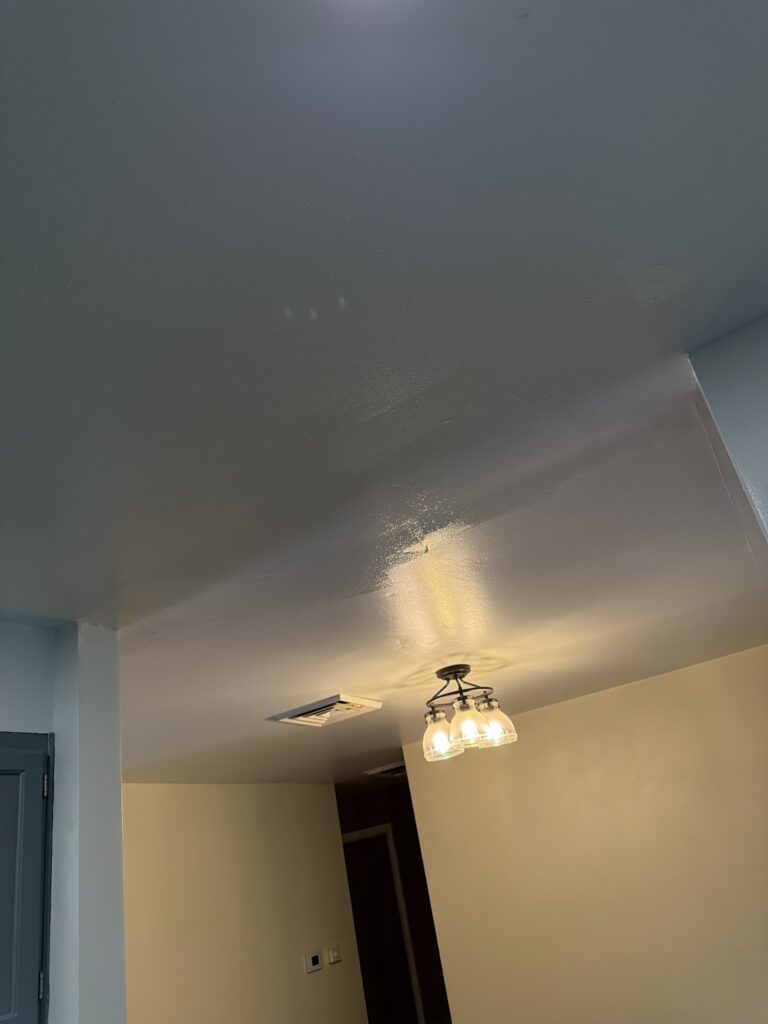
Confirm whether your quote covers drywall and texture only, or also includes primer and painting. In some rooms, painting the whole wall or ceiling produces a more consistent finish than touching up the patch alone. Our interior painting service can be discussed as part of the estimate.
What to send for a texture-matching estimate
- A close-up photo of the existing texture beside the damage.
- A wider photo showing the entire wall or ceiling and nearby windows or lights.
- Approximate repair dimensions and the number of damaged areas.
- Your city or ZIP code, ceiling height if relevant, and any access limitations.
- Whether a leak caused the damage and whether it has been resolved.
- Whether you want painting included, and whether original paint is available.
Patch Pros handles drywall repair and ceiling repair in Denver and surrounding communities. Browse our project gallery for examples of repair and finishing work.
Texture-matching questions
Can you guarantee an invisible patch?
The goal is a close blend, but an invisible result cannot be promised for every surface, paint finish, or lighting condition. A useful estimate explains the expected result and any limits before work begins.
Does the whole ceiling need new texture?
Not always. The number and condition of the repairs, the existing pattern, and your expectations help determine whether local blending or a larger finish area makes sense.
Can texture fix a recurring crack?
Texture is a finish, not a repair for movement or failed tape. The cause needs attention first. Read our guide to drywall cracks that keep coming back for more detail.
Request a texture-matching estimate
Send photos and a short description of the damage. We can discuss the repair area, the existing finish, and whether painting should be included so you know what the estimate covers.
Further reading: USG’s drywall repair and texture guidance.