
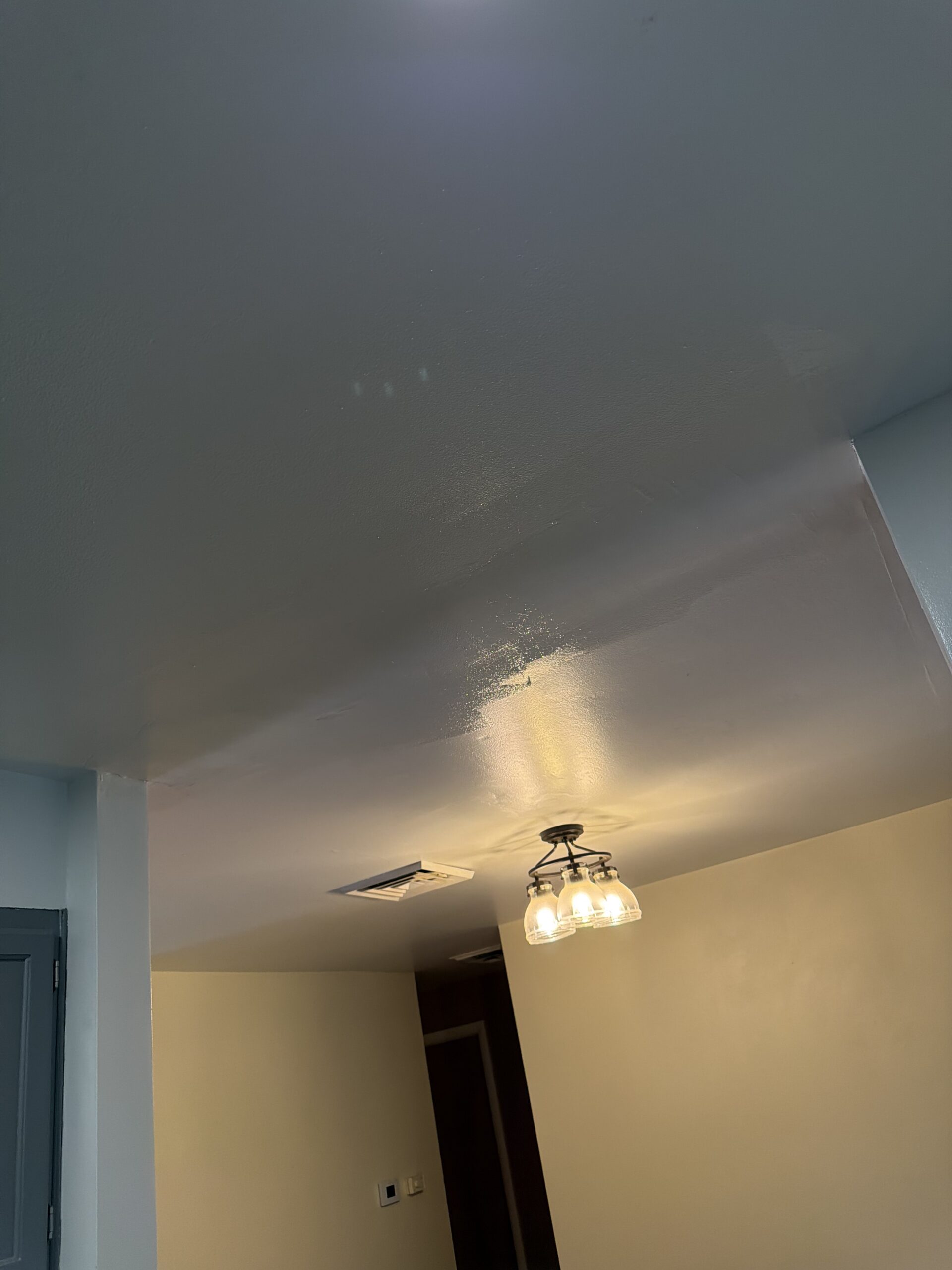
Two walls can both be called orange peel and still look different across the same room. One may have tiny, closely spaced bumps; another may have larger droplets softened by years of paint. Knockdown finishes vary just as much. Matching a repair means understanding the surface you have, not choosing a familiar name from a can.
If you are comparing finishes for a Denver remodel or trying to make one patch blend, start with the appearance, room lighting, and amount of surface being changed. Those decisions matter more than picking whichever texture seems easiest to apply.
What orange peel looks like
Orange peel has a fine, pebbled appearance with rounded texture marks. A light application can read as a subtle surface from across a room. A heavier version is more obvious, especially when light travels along the wall rather than directly toward it.
For an existing repair, pay attention to the size and spacing of the marks. Adding a dense patch of small droplets to a wall with a more open pattern creates a visible island. Paint can soften the old pattern further, so the new application needs to be evaluated against the surrounding finished surface.
What knockdown looks like
Knockdown has broader, flattened texture marks with spaces between them. The amount of flattening, the shape of the marks, and their distribution all affect the appearance. A small, tight pattern and a broad, open pattern may share the same label but require different approaches to blend.
Neither texture automatically produces a better room. The choice should fit your existing finishes and the look you want. USG’s texture product guidance shows that texture materials can produce a range of patterns, from light orange peel to spatter and knockdown. The material name alone does not identify the final finish.
Compare the finish in your own lighting
Look from the doorway and along the wall
Stand where you normally use the room, then look along the surface from a window or doorway. Side lighting can reveal high spots, raised seams, or abrupt texture transitions that disappear in a straight-on photograph. Check the ceiling with its regular fixtures on as well as in daylight.
Include paint sheen in the decision
A wall with a higher-sheen paint can reveal a repair differently from a flatter finish. Even a close texture match may stand out when the new paint absorbs light differently. Discuss the planned paint finish while choosing the texture, rather than leaving paint as an unrelated final decision.
Consider transitions between rooms
Before changing one wall or ceiling, identify where the new finish will stop. A doorway, corner, or architectural break may provide a clearer transition than stopping midway across a continuous surface. Take wide photos so the estimate reflects those boundaries.
Why the patch underneath matters
Texture cannot correct a loose panel, failed joint, raised patch, or an unresolved leak. A convincing finish begins with sound drywall repair and a gradual transition between the repaired area and the existing surface.
For example, spraying orange peel over a patch that sits proud of the wall may leave a visible hump even when the droplets look right. A ceiling seam with loose tape needs repair before new knockdown is applied. Identify the surface problem first, then choose the finish treatment.
Match a small repair or refinish a larger area?
A local blend can be appropriate
An isolated repair with a sound, consistent surrounding texture may suit a local blend. The estimate should explain how far finishing extends beyond the opening, what preparation is included, and whether the area will be left ready for paint or fully painted.
A wider finish may make more sense
Several nearby patches, repeated previous repairs, or a heavily painted pattern can make a larger blend area worth considering. This is a scope decision. Ask what improvement a wider area is expected to provide and where the work will stop.
Smooth finishes are another option
If you want to remove the visual texture across a wall, discuss skim coating and smooth finishes. Smoothing a surface requires preparation and finishing; it is not simply a thinner coat of paint. Existing coatings and surface condition influence the approach.
Prepare useful photos for a texture estimate
You do not need to know the exact texture name before contacting a contractor. Send information that shows the finish clearly:
- A close-up of undamaged texture beside the repair, with a coin or ruler for scale.
- A wider image showing the whole wall or ceiling and nearby windows or lights.
- A photo with the room’s normal lighting on.
- Approximate patch dimensions and the number of repair areas.
- A note about whether original paint is available and whether painting should be included.
Avoid sending only the damaged hole. The surrounding surface is the reference for the match. Our guide to matching an existing wall or ceiling texture explains what affects the result after a repair.
Compare quotes by the included work
A quote for texture alone may leave patch preparation, protection, sanding, primer, and paint to someone else. Ask whether those steps are included and how many visits the work is expected to require. Confirm whether the contractor is matching a small area or refinishing the full surface.
An invisible result cannot be promised for every aged finish or lighting condition. A useful estimate explains the expected blend and the limits before work starts. That is more valuable than a vague promise that every texture can be matched perfectly.
Request a Denver texture matching estimate
Patch Pros can review orange peel, knockdown, smooth finishes, and repairs that need to blend with an existing room. Send close-up and wide photos, your city, approximate dimensions, and your painting preferences.
Request a free texture matching estimate or text photos to 720-980-8998. We will discuss the preparation, blend area, and finish that make sense for your project.